
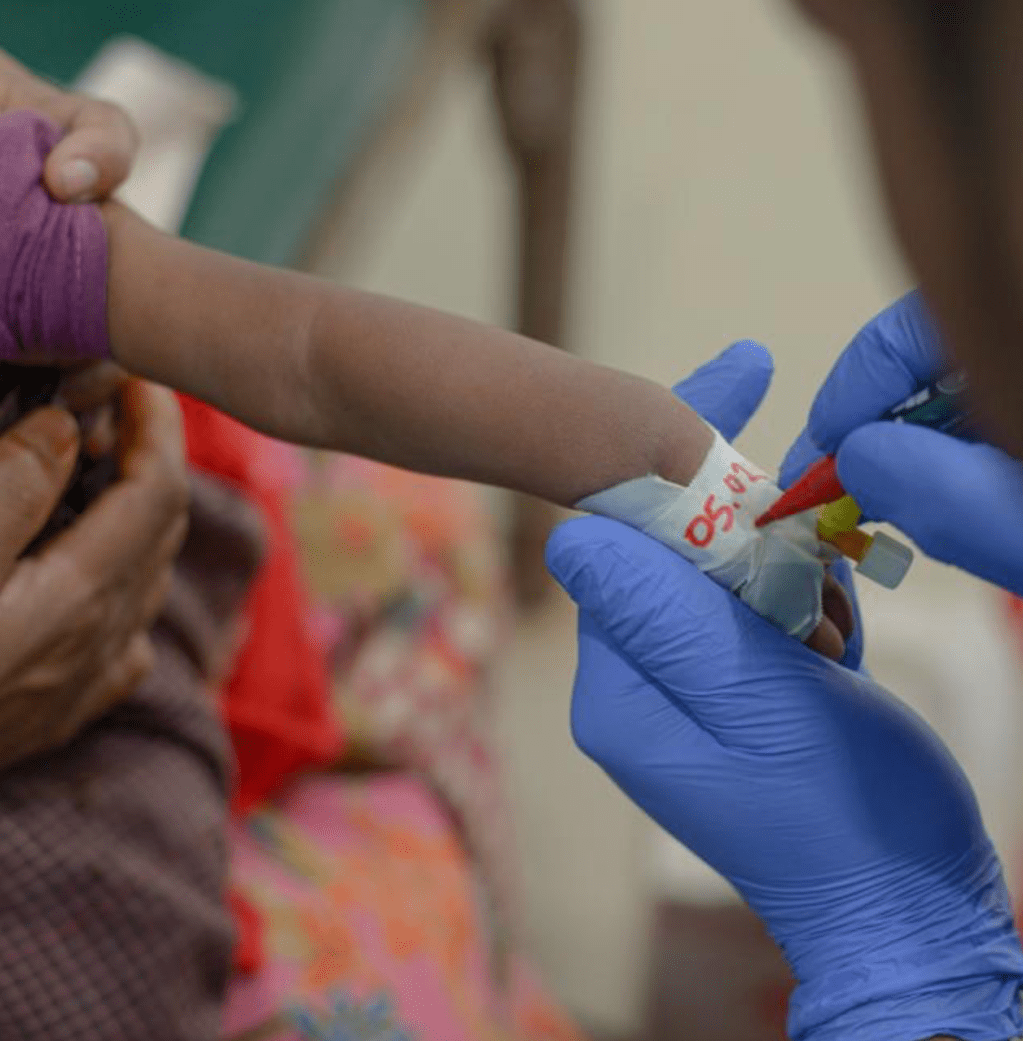
Measles, a deadly disease that was once thought to be on the brink of extinction, has been resurging worldwide. Despite being preventable through vaccination, the recent outbreak highlights the global healthcare inequities that persist when it comes to access and medical delivery, as well as a paradigm shift in global consensus and political stigma against immunization.
What’s Causing These Outbreaks?
From being at an all time low, measles cases have drastically increased in the last 5 years in rural and urbanized communities alike.1-3 Low-resource and conflict-affected areas experience limited healthcare infrastructure, higher rates of workforce shortages, and population displacement, all of which contribute to the disruption of vaccination programs.2 Caregivers in these more rural areas must travel long distances, often without reliable transportation, to reach clinics and hospitals that are usually found in more developed areas. Meanwhile, in more affluent countries, a steady decline in vaccination rates can be linked
to the vastly spreading misinformation regarding vaccines. This has caused some members of the population to doubt the efficacy of vaccinations, further widening immunity gaps.4 Recent health forums from global health organizations, such as UNICEF, suggest that these trends may be linked to the lingering effects of the COVID-19 pandemic, from the reinforced changes in immunization practices and public trust during that time.4
The heart of the problem lies in the global fall of vaccination rates. For instance, measles vaccination rates among American school-age children fell from 95% in 2019, to 92% in 2023.5 During a recent measles outbreak in West Texas, vaccination rates were reported to have fallen below 82%.5 This decline is critical because, as health experts from Harvard note, community protection from measles requires at least 95% of the population to be vaccinated.5 The measles vaccine, most commonly given as the MMR (Measles, Mumps, Rubella) vaccine and administered in early childhood to provide lifelong protection, is highly effective, but its protective power only works if almost everyone gets vaccinated i.e. herd immunity.
This further illustrates the direct correlation between reduced immunization rates and increased outbreak risk, emphasizing the importance of immunity education and strong vaccination policies to ensure communal protection.4,5 The consequences of growing immunity gaps were made fatally clear in 2019, when a joint report with WHO and CDC attributed over 207,500 global measles deaths due to failures in vaccination coverage.3
MSF’s Role in Combating the Crisis
The MSF continues to lead emergency measles responses in regions especially prone to outbreaks, such as in Chad, the Democratic Republic of Congo, and the Central African Republic, where local health authorities often lack the resources to carry out routine vaccination. In 2023 alone, MSF vaccinated 3.3 million people, coming from these and other underserved communities, against measles.6,7 The MSF’s mobile clinics were able to reach remote villages and conflict zones, providing both immunization and urgent medical care to infected children.
The MSF also collaborates with local doctors, clinics, and health ministries in countries such as, South Sudan, Nigeria, and Afghanistan. Through partnerships, they provide health workers with resources and training to be properly equipped when dealing with measles and to ensure efficient containment.8
Looking Forward
The fight against measles does not stop at distributing vaccines. The MSF and other global health organizations are actively working to make sustainable progress by investing more money into mobile clinics to reach isolated and war-struck populations. Work also needs to be done to make the vaccine more affordable, to allow for more equitable procurement and distribution of these vaccines. Community engagement is also crucial, to build trust and counter misinformation, regardless of socioeconomic background.9
The resurgence of measles acts as a reminder that healthcare is a shared journey, and can only go as far as the people that it reaches. Every person, regardless of their geographical or socioeconomical background, deserves equal access to lifesaving care, and the MSF is working to close these gaps, bringing hope and support to underserved communities, for the fight against measles.
References
- Centers for Disease Control and Prevention. Global measles outbreaks. Global Measles Vaccination. October 8, 2025. https://www.cdc.gov/global-measles-vaccination/data-research/global-measles-outbreaks/index.html
- UNICEF. Immunization in crisis settings. 2024. https://www.unicef.org/immunization/crisis-settings
- World Health Organization. Global measles update: falling vaccination rates. 2024. https://www.who.int/health-topics/measles
- UNICEF. New data indicates declining confidence in childhood vaccines of up to 44 percentage points in some countries during the COVID-19 pandemic. April 20, 2023. https://www.unicef.org/press-releases/sowc_2023_immunization
- Shmerling RH. Measles is making a comeback: can we stop it? – seven things to know about the recent measles outbreaks. Harvard Health Blog. October 24, 2025. https://www.health.harvard.edu/blog/measles-is-making-a-comeback-can-we-stop-it-202503063091
- Médecins Sans Frontières. Measles: resurgence of a preventable disease. Infectious But Not Invincible. 2024. https://doctorswithoutborders-apac.org/en/infectious-but-not-invincible/measles
- Médecins Sans Frontières. Measles: what we do. 2023. https://www.msf.org/measles
- Médecins Sans Frontières. How MSF teams have responded to a measles outbreak in Masisi amid ongoing clashes. MSF Canada. June 26, 2025. https://www.doctorswithoutborders.ca/democratic-republic-of-congo-how-msf-teams-have-responded-to-a-measles-outbreak-in-masisi-amid-ongoing-clashes
- MSF Access Campaign. Vaccine affordability and access: the ongoing challenge. 2023. https://msfaccess.org/vaccines

