
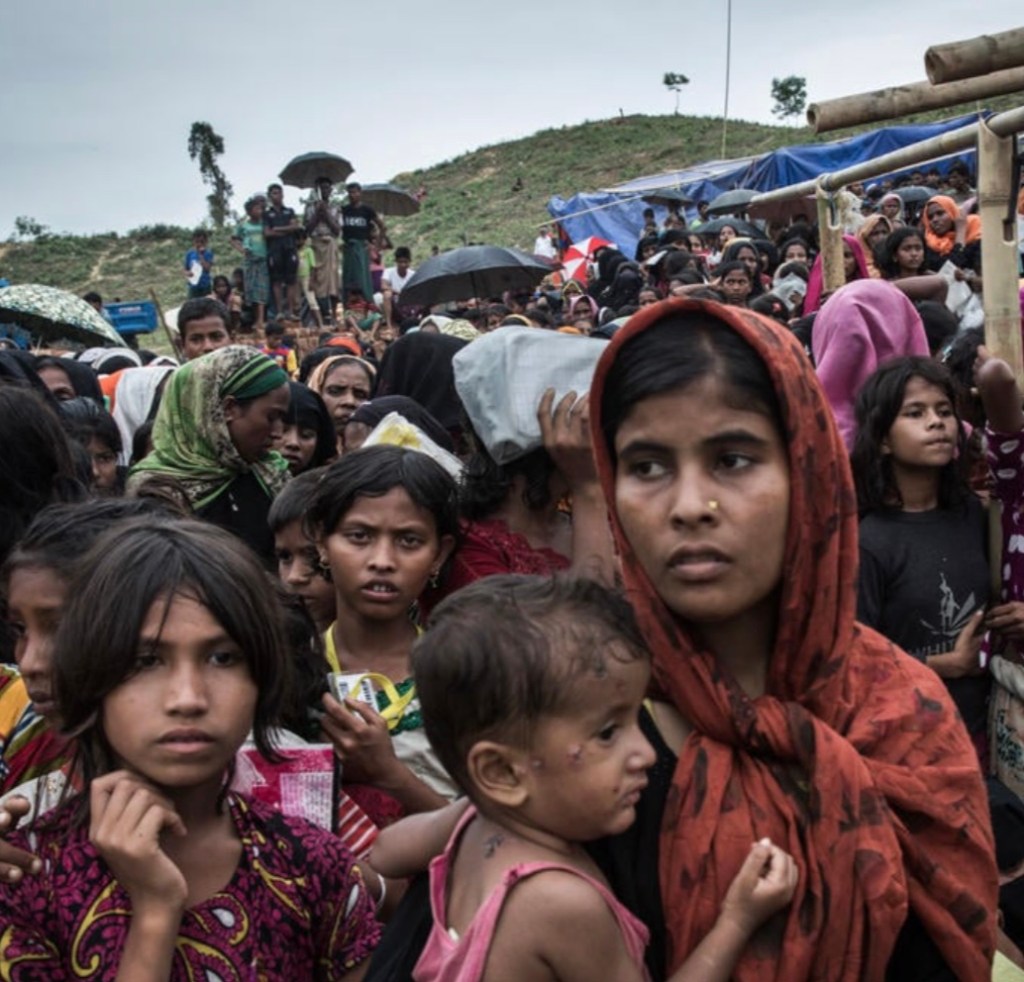
Imagine living in one place for your entire life, yet being told you don’t belong. For the Rohingya people, this is a stark reality—stripped of citizenship, denied basic rights, and left in a constant struggle for survival in their own homeland. The Rohingya are a stateless ethnic group that have faced severe restrictions by the Myanmar government since 1982. They lack access to simple human rights, such as healthcare, education, and even movement, tarnishing their entire livelihood. Although the Rohingya have resided in Myanmar’s Rakhine State for centuries, the authorities have not recognized their citizenship, instead labelling them as Bengali immigrants.1
Médecins Sans Frontières (MSF) has provided medical aid to the Rohingya in Myanmar and the surrounding area for decades.2 From 1977 to 1978, Myanmar’s Operation Dragon King issued mass arrests, persecution, and violence toward the Rohingya.2 This drove refugees to seek asylum in neighbouring countries, with many fleeing to Bangladesh.
In response to this, MSF provided medical aid to the 200,000 Rohingya in Bangladeshi refugee camps.2 In 2017, the Myanmar military again launched systematic attacks, razing villages and forcing people to flee. Surviving Rohingya stated many families could not escape in time, with some trapped in their homes as they burned down.1 Thousands were killed, with MSF alone documenting 6700 deaths.3 Approximately 600,000 from the original 1.1 million remain in the Rakhine state, with 140,000 living in displacement camps with limited access to essential resources.1
Today, over a million people occupy camps in Cox’s Bazar, Bangladesh—the largest refugee settlement in the world.1 With the influx of arrivals since the military crackdown, living conditions have severely declined. Temporary shelters, built on slopes of areas prone to flooding, also increase the risk of fires due to their proximity with one another.1 The water supply is insufficient to meet everyone’s needs and its sanitation is extremely poor. The proliferation of many diseases, including dengue and skin infections, are common due to the unsanitary conditions they must endure.1 They are dependent on financial aid due to restrictions in movement, which in turn limits employment and education opportunities.1 In Malaysia, refugees, asylum-seekers, stateless people, and even those registered with the UN’s refugee agency, are criminalised by domestic law.1 Consequently, Rohingya refugees face the constant risk of arrest, forcing them to resort to informal dirty, dangerous, and difficult work conditions to survive.1
Even today, MSF continues to play a vital role in supporting the Rohingya people today. Operating across nine sites in Cox’s Bazar, the organization provides essential medical care, including chronic disease management, emergency care, and mental health support. To decrease the emergence of new diseases and pathogens, MSF constructs clean water sources such as hand pumps and wells.1 Hygiene is also promoted through the establishment of faecal sludge treatment plants and water networks.1 In Malaysia, MSF supports the Rohingya through clinics and activities in detention centres. Seeing an increase in sexual violence and trafficking as well, MSF refers patients to secondary and tertiary healthcare in response to the decline in their mental and physical health.1
Beyond medical aid, MSF is advocating for greater international efforts to ensure a better future for the Rohingya. MSF emphasizes that issues regarding the lack of legal status of those displaced and the underlying causes of discrimination in Myanmar must be addressed to ensure the rights and livelihood of this group.4
The Rohingya’s plight remains a pressing humanitarian crisis, highlighting the urgent need for sustained international support and intervention. MSF continues to play a critical role in providing life-saving medical aid and advocating for the rights of the Rohingya. Only through sustained international support can the Rohingya live with the security, basic rights, and stability every community deserves.
References
- Rohingya refugee crisis in depth: MSF. Médecins Sans Frontières (MSF) International. (n.d.). https://www.msf.org/rohingya-refugee-crisis-depth
- Timeline: A visual history of the Rohingya refugee crisis. Médecins Sans Frontières (MSF) International. (2022, August 24). https://www.doctorswithoutborders.org/latest/timeline-visual-history-rohingya-refugee-crisis
- One million Rohingya remain in precarious conditions five years on: MSF. Médecins Sans Frontières (MSF) International. (2022, August 25). https://www.msf.org/one-million-rohingya-remain-precarious-conditions-five-years
- Hundreds of thousands of Rohingya people trapped in stateless limbo.MSF. Médecins Sans Frontières (MSF) International. (2019, August 20). https://www.doctorswithoutborders.org/latest/hundreds-thousands-rohingya-people-trapped-stateless-limbo
Edited by: Colin Fife, Lauren Choi, Tarun Aadithya
 McMaster Friends of MSF