
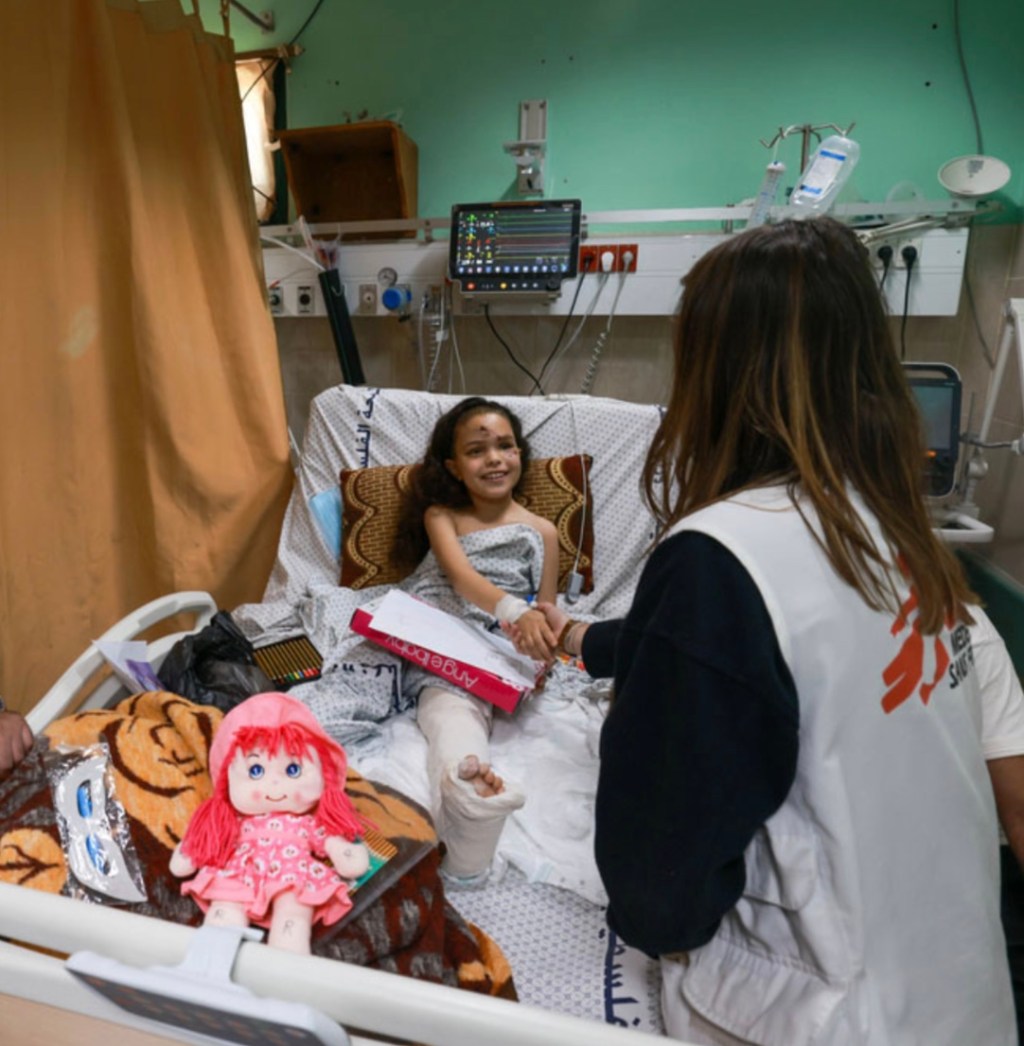
Médecins Sans Frontières (MSF) has been at the forefront of efforts to provide critical medical aid in Gaza, where healthcare services are severely strained by decades of repression and ongoing crises. Recent escalations in violence have worsened the already dire conditions by damaging crucial infrastructure, overloading medical facilities, and depleting essential supplies.1
Since the onset of this humanitarian emergency, over 41,500 Palestinians have died, nearly 100,000 have sustained injuries, and thousands are estimated to be trapped under debris.1 Around 1.9 million people – 90% of Gaza’s population – have been forcibly displaced.1 As the attacks persist, the availability of crucial resources such as food, water, fuel, and electricity is dwindling, which in turn increases the risk of disease and starvation.1,2 In these conditions, accessing life-saving medical care has become nearly impossible.1
MSF has responded by providing emergency care, focused on patients with severe burns and fractures,2,3 at the 17 partially functional hospitals of the original 36.2 Despite critical shortages of sterile compresses, painkillers, and other essential medical supplies,3 MSF continues to provide care to the overwhelming influx of patients in Gaza.1
The continued blockade and restrictions on humanitarian aid in Gaza are significant obstacles MSF faces in getting medical supplies into the region. The Rafah crossing closure and delays at the Kerem Shalom entry point have left over 1,200 MSF aid trucks stranded at the border,3 jeopardizing MSF’s operations at a time when the people of Gaza require their assistance the most.
Despite these challenges, MSF continues to offer vital medical care to displaced civilians with harsh living conditions. With 75% of the population displaced from their homes, many are crammed into unsanitary makeshift shelters, leading to a rise in communicable diseases like scabies and respiratory infections, particularly among children and the elderly. Amidst high patient volumes and scarce resources, MSF’s dedication has not wavered, and they continue to treat thousands of patients in often overcrowded facilities.3
MSF is also addressing the psychological toll of the crisis, especially on children traumatized by loss, injury, and displacement. Through collaborations with schools and community groups, MSF is offering mental health programs to help patients cope with the devastating emotional impacts of conflict and restore a sense of stability in an otherwise distressing and turbulent environment.2
Beyond medical aid, MSF’s efforts are also directed towards advocating for an immediate ceasefire. In line with international humanitarian law, MSF works to ensure unhindered access to humanitarian support and to protect medical workers and facilities.1 MSF emphasizes that denying access to healthcare violates basic human rights and is pushing for greater international awareness and intervention in this regard.
Overall, as the ongoing devastation in Gaza persists, MSF remains a vital lifeline for the thousands of civilians in Gaza, offering not only medical treatment. but also hope in the face of seemingly insurmountable challenges.
References
- Gaza Israel war | MSF. Accessed November 13, 2023. https://www.msf.org/gaza-israel-war
- Gaza crisis: MSF response to the Israel-Gaza war | Doctors Without Borders – USA. Accessed October 25, 2024. https://www.doctorswithoutborders.org/latest/our-response-israel-gaza-war
- MSF health facilities across Gaza face critical shortage of medical supplies | MSF. Accessed October 25, 2024. https://www.msf.org/msf-health-facilities-across-gaza-face-critical-shortage-medical-supplies
Edited by: Andrew Yang
 McMaster Friends of MSF